Introduction
Vaping has evolved from a niche alternative to smoking into a major part of modern nicotine culture. Devices, flavors, online communities, retail businesses, and changing consumer habits have all contributed to that growth. But behind these changes is another powerful influence: federal regulation. The FDA in shaping vape culture has played a major role in determining which products can enter the U.S. market, how they can be promoted, and how consumers encounter vaping products.
The U.S. Food and Drug Administration does not simply regulate individual vape products. Its policies influence the broader environment surrounding vaping. Age restrictions, warning labels, marketing requirements, product reviews, enforcement actions, and authorization decisions all affect how manufacturers and consumers interact with the category.
Understanding the FDA in shaping vape culture therefore requires looking beyond individual devices or brands. It means examining how regulation has changed the industry’s identity, availability, marketing practices, and relationship with consumers.
For a useful regulatory reference, readers can review this FDA e-cigarette regulation overview, which explains how the agency approaches e-cigarettes, vapes, and other electronic nicotine delivery systems.
How the FDA Became a Major Force in Vape Culture
The FDA’s involvement in vaping did not begin with today’s market. Its regulatory authority expanded significantly in 2016, when the agency finalized the Deeming Rule. This brought electronic nicotine delivery systems and several other previously unregulated tobacco products under federal tobacco-product authority.
That change was important because vaping had already developed a recognizable consumer culture. Vape shops, online retailers, enthusiast communities, flavors, customized devices, and social-media content were becoming increasingly visible.

Federal oversight introduced a different framework.
Instead of viewing vaping purely as a consumer electronics trend, regulators treated qualifying nicotine products as tobacco products subject to the Federal Food, Drug, and Cosmetic Act and the Tobacco Control Act.
This distinction continues to shape the industry today.
From Consumer Trend to Regulated Product Category
Before comprehensive federal oversight, consumers could encounter a rapidly expanding variety of devices and e-liquids. Regulation introduced greater scrutiny over what manufacturers could legally market.
The FDA explains that new tobacco products generally require premarket authorization before they can legally be marketed in the United States.
That requirement fundamentally changed the business environment.
Manufacturers now have to consider regulatory evidence, product submissions, manufacturing requirements, labeling, marketing practices, and potential enforcement when developing products.
As a result, the modern vape culture is partly defined by regulation itself.
FDA Product Authorization and the Modern Vape Market
One of the FDA’s most influential responsibilities is reviewing applications for new tobacco products.
The Premarket Tobacco Product Application, or PMTA, pathway requires manufacturers seeking authorization for new tobacco products to provide information that allows FDA to assess whether marketing the product would be appropriate for the protection of public health.
This process has changed the competitive landscape.
A product cannot simply become popular and assume that popularity guarantees continued legal availability. Manufacturers have to navigate the federal authorization system, while retailers need to understand which products can legally be sold.
As of September 2026, the FDA’s published authorization list states that 48 e-cigarettes are authorized for lawful sale in the United States.
That illustrates how dramatically different today’s regulatory environment is from the early years of vaping.
Why Authorization Matters to Consumers
For consumers, FDA authorization can influence which products remain available through legitimate U.S. retailers.
For manufacturers, authorization can become a major commercial milestone.
For retailers, it creates an additional compliance consideration.
For the broader culture, it contributes to a more limited and regulated product ecosystem.
This does not mean that every authorized product is safe. FDA regulation should not be interpreted as a declaration that a tobacco product is harmless. The FDA itself emphasizes that regulation does not mean a regulated tobacco product is safe to use.
That distinction is particularly important when discussing vaping responsibly.
How FDA Rules Changed Vape Marketing
Marketing is one of the clearest areas where the FDA in shaping vape culture becomes visible.
Vaping originally developed alongside strong visual branding, flavor-oriented messaging, lifestyle imagery, online communities, and retail experiences. Regulation has placed boundaries around how tobacco products can be promoted and represented.
The FDA maintains requirements governing advertising, promotion, labeling, and certain sponsorship activities involving tobacco products.
These rules influence how companies communicate with potential customers.
The Shift Away From Unrestricted Lifestyle Marketing
The early vape marketplace often presented products through technology, flavor, design, convenience, and lifestyle positioning.
As federal oversight developed, manufacturers had to become more conscious of regulatory restrictions and youth appeal.
This matters because marketing does more than sell a product. It helps create culture.
When certain visual styles, claims, promotional techniques, or marketing channels become restricted or risky, the industry’s cultural language changes with them.
The result is a vape culture increasingly shaped by compliance alongside consumer trends.
Youth Protection Has Strongly Influenced Vape Culture
Protecting young people is one of the most important reasons behind tobacco regulation.
The FDA states that federal rules restrict tobacco-product sales to people under 21 and require retailers to verify age under applicable federal requirements. The agency also prohibits free samples and places restrictions on vending-machine sales.
These measures affect vape culture because accessibility is closely connected with cultural adoption.
The CDC notes that e-cigarettes have been the most commonly used tobacco product among U.S. youth and identifies factors such as marketing, flavored products, social influences, and nicotine as influences on youth vaping.
Consequently, youth protection has become central to regulatory conversations about flavors, advertising, retail practices, packaging, and product design.
Why Flavors Became Such a Major Regulatory Issue
Flavor has always been an important part of the vaping conversation.
Consumers may associate flavors with personalization and product variety, while public-health officials have raised concerns about whether certain products can attract young people.
This creates a difficult regulatory balance.
On one side, regulators must consider whether products could encourage nicotine initiation among non-users, particularly young people. On the other, adult smokers and existing nicotine consumers may have different preferences and motivations.
The FDA’s role is therefore not simply to decide whether a flavor is popular. Its regulatory decisions involve broader public-health considerations.
Warning Labels Changed the Way Consumers Understand Vaping
Another important contribution of the FDA is the use of required health warnings.
For regulated tobacco products, federal requirements establish warning statements for packaging and advertising.
This has a cultural effect that is easy to overlook.
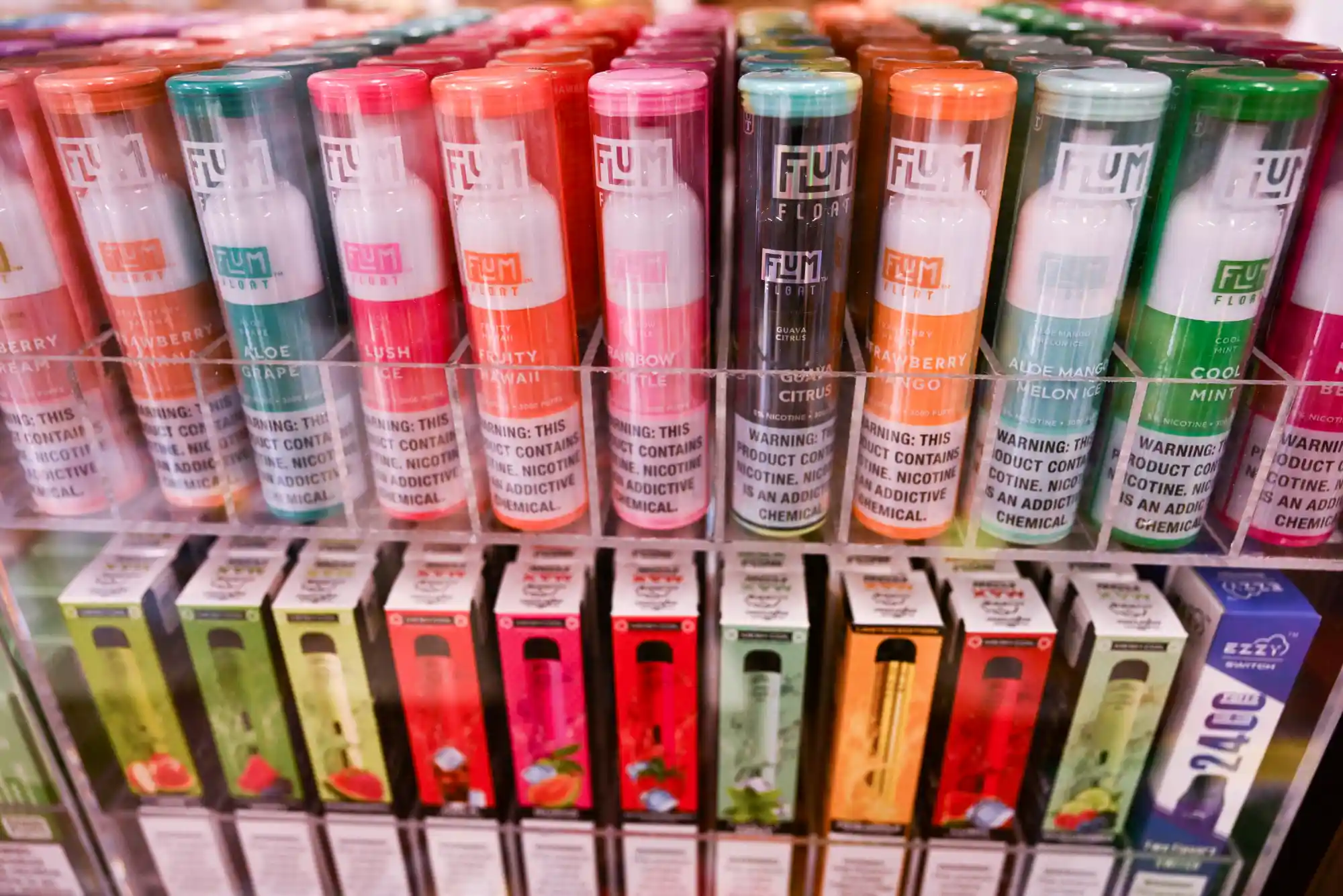
Packaging is part of consumer education. When a product carries a prominent nicotine warning, consumers receive a message about addiction and risk at the point of purchase or use.
This helps move vaping away from the perception of being purely a technology or lifestyle product.
Instead, the warning communicates that nicotine-containing vaping products belong within a regulated tobacco framework.
That distinction has become an important part of modern vape culture.
FDA Enforcement Has Changed Industry Behavior
Regulation only works when businesses understand that violations can lead to enforcement.
The FDA has issued warning letters and taken other enforcement actions involving unauthorized tobacco products, including electronic nicotine delivery systems. The agency also monitors manufacturers, importers, distributors, and retailers for compliance with federal requirements.
This creates a practical incentive for companies to pay closer attention to regulatory requirements.
A manufacturer developing a new device or e-liquid has to think about more than consumer demand. It must also consider whether the product can satisfy the applicable regulatory framework.
That reality has encouraged a more compliance-focused business culture within the industry.
How Regulation Influences Vape Shops and Retailers
The FDA’s influence extends beyond manufacturers.
Retailers selling e-cigarettes and other tobacco products must follow federal rules concerning age verification, prohibited sales practices, free samples, and other requirements.
For vape shops, this means that compliance is part of everyday business operations.
Staff training, age verification, product sourcing, inventory decisions, and advertising practices can all become regulatory concerns.
The FDA therefore indirectly shapes the consumer experience.
A customer entering a compliant retailer may encounter stricter age checks, fewer promotional practices, and a more controlled product selection than they would have encountered during the industry’s earlier development.
The Role of Online Communities in a Regulated Vape Culture
Vaping culture is not limited to physical stores.
Online communities have historically played a major role in product discussions, device comparisons, troubleshooting, consumer education, and general conversation about nicotine products.
Regulation has not eliminated these communities, but it has changed the context in which businesses participate.
Companies have to be careful about product claims and promotional content, while consumers increasingly encounter discussions about legality, authorization, product availability, and regulatory changes.
This creates a culture where regulatory knowledge itself can become valuable.
Consumers who follow the industry closely may pay attention not only to new devices and e-liquids but also to FDA announcements and changes in federal policy.
How New Nicotine Laws Affect Consumer Behavior
Regulatory changes can directly influence what consumers see on store shelves and what businesses choose to carry.
Product authorization, enforcement priorities, age restrictions, and other rules can all affect availability.
Consumers interested in the broader legal landscape can also explore How New Nicotine Laws Affect Vape Consumers for additional context on how changing nicotine policies can influence purchasing and everyday consumer decisions.
This is especially important because federal regulation is only one part of the picture.
State and local governments can introduce additional restrictions, taxes, licensing requirements, flavor rules, or other measures. Therefore, consumers and businesses should avoid assuming that a product legal under federal rules is automatically permitted everywhere.
FDA Regulation and Harm Reduction: A Complicated Debate
One of the most difficult aspects of vape policy is the relationship between vaping and cigarette smoking.
The CDC states that e-cigarettes are not safe and that most contain addictive nicotine. At the same time, it notes that e-cigarettes may have the potential to benefit adults who smoke cigarettes if used as a complete substitute for smoked tobacco products.
This creates a nuanced public-health discussion.
A regulation designed to reduce youth nicotine use must also consider adults who already smoke.
The FDA evaluates new tobacco products through a population-level public-health framework, considering risks and benefits to users and non-users.
That framework helps explain why the regulatory conversation cannot be reduced to simply being “for” or “against” vaping.
The central question is how different products and policies affect the population as a whole.
The FDA’s Influence Will Continue to Shape Vape Culture
Vape culture is not static.
New nicotine technologies, disposable formats, nicotine formulations, flavors, product designs, and consumer behaviors continue to emerge. Regulation therefore has to evolve alongside the market.
Recent FDA marketing decisions demonstrate that the authorized market continues to change. In May 2026, for example, the FDA announced marketing authorization for four additional Glas ENDS products.
These decisions can influence which companies remain competitive, what products consumers encounter, and how manufacturers approach future product development.
The relationship between regulation and culture is therefore ongoing.
Technology Will Not Develop in Isolation
Future vape products will likely continue to reflect technological innovation.
However, successful commercialization in the United States will increasingly depend on navigating regulatory requirements.
That means the future of vape culture will probably be shaped by two forces at the same time: consumer demand and regulatory boundaries.
Companies that understand only consumer trends may struggle with compliance. Companies that understand only regulation may struggle to connect with consumers.
The strongest businesses will need to understand both.
What the FDA’s Role Means for Consumers
For consumers, understanding the FDA’s role can make it easier to interpret claims about vaping products.
An FDA-regulated product is not automatically risk-free.
An FDA authorization is not the same as a claim that vaping is harmless.
Likewise, a product being discussed online does not necessarily mean that it is legally authorized for sale in the United States.
Consumers should check current federal information, understand applicable state and local laws, and be cautious about unsupported health claims.
For those researching the industry and following product developments, vaporcrafts can provide additional reading about nicotine laws, consumer issues, and the changing vaping landscape.
The FDA’s Lasting Impact on Vape Culture
The FDA in shaping vape culture is a story of regulation influencing an industry that developed remarkably quickly.
Since federal tobacco authority expanded to cover e-cigarettes and other ENDS products, the FDA has influenced product authorization, retail practices, warning labels, marketing, youth-access restrictions, and enforcement.
Those policies have changed more than what companies can sell. They have helped shape how vaping is discussed, marketed, purchased, and understood.
The result is a vape culture that exists between consumer demand, technological innovation, public-health concerns, and increasingly detailed regulatory requirements.
As the industry continues to evolve, consumers and businesses should keep up with official FDA announcements rather than relying solely on social-media discussions or outdated information. Understanding the regulatory environment is one of the best ways to make sense of where vaping culture is heading next.
FAQs
Is vaping regulated by the FDA?
Yes. The FDA regulates e-cigarettes, vapes, and other electronic nicotine delivery systems that fall under its tobacco-product authority. Federal regulation expanded significantly when the Deeming Rule took effect in 2016.
Does the FDA approve all vape products?
No. FDA regulation does not mean every vape product is authorized. New tobacco products generally need appropriate premarket authorization before they can legally be marketed in the United States. The FDA maintains a list of products that it has authorized for marketing.
Are FDA-approved vapes safe?
No. FDA authorization should not be interpreted as a statement that a product is safe or risk-free. The FDA specifically notes that regulation of tobacco products does not mean the products are safe.
What is the legal age to buy vape products in the United States?
Federal law prohibits the sale of tobacco products, including e-cigarettes, to people younger than 21. Retailers must follow federal age-verification requirements.
Why does the FDA regulate flavored vape products?
Flavors are part of the broader public-health debate because research and public-health agencies have identified flavored products as one factor that can influence youth vaping. The FDA considers these issues when evaluating tobacco products and developing regulatory policies.
Can a vape product be legal in one state but restricted in another?
Yes. Federal FDA rules are only one layer of regulation. States and local governments may impose additional restrictions, taxes, licensing requirements, or product-specific rules. Consumers should check the laws that apply where they live.
How does the FDA affect the future of vaping?
The FDA can influence which products receive marketing authorization, how companies advertise and label products, and how retailers operate. As new nicotine technologies develop, these regulatory decisions will continue to influence the direction of the U.S. vaping market.